
The three numbers
Ask three calf rearers how their shed is going, and you'll get three vibes. Almost no one will give you a number. That's a problem — and here are the three that fix it.
Ask three calf rearers how their shed is going and you'll get three vibes. "Good." "Battling a bit." "Fine, I think." Almost no one will reach for a number. And that's the problem — because calf rearing is the part of dairy farming where small numbers compound into very big outcomes.
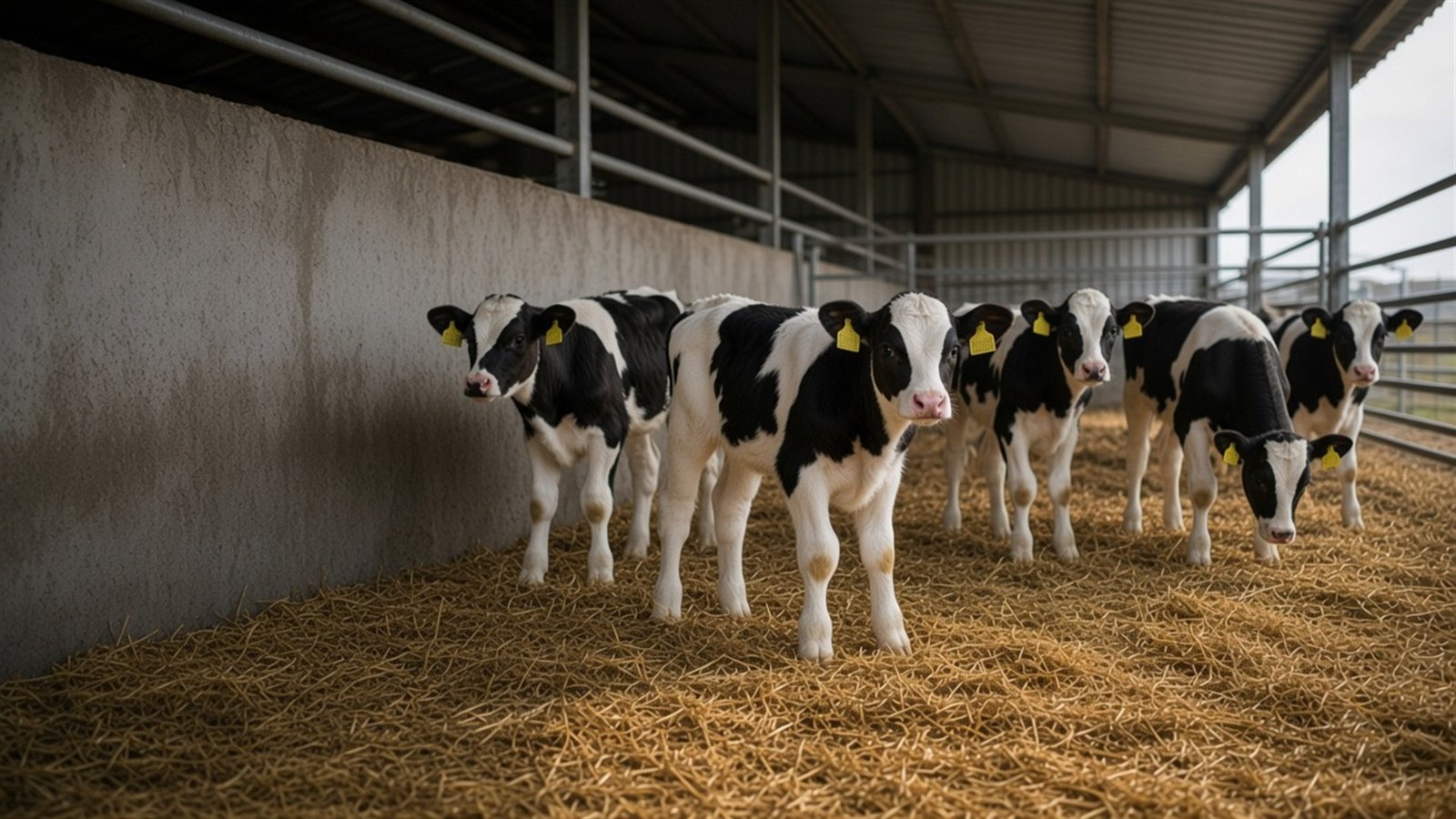
A 3% pre-weaning mortality shed and an 8% mortality shed look the same from the road. The difference between them, on a 200-calf operation, is around twenty grand a year. Twenty grand that nobody on either farm is consciously feeling, because no one is counting properly.
There are three numbers — three — that, if you know them by memory, tell you roughly 80% of what's true about your calf shed. None of them take more than five minutes a month to track. All three are sitting on the Reports page of your software (whichever software you use). And almost none of the farms we visit can quote all three when asked.
Number one — pre-weaning mortality %
The percentage of calves born alive that die before weaning.
What good looks like
- Under 3% — excellent. Tight shed, well-run.
- Under 5% — good. Industry-best ballpark.
- 5–8% — workable, but something is leaking. Usually colostrum, scours, or housing.
- Over 8% — actionable. Stop guessing. Get a vet review. Start with colostrum recording.
The maths: in the last twelve months, divide deaths by births. If you reared 100 calves and lost six, that's 6%. Simple.
The reason this is the top number isn't squeamish. It's economic. Every dead calf is a heifer who never milked, a herd replacement you'll buy in someone else's calf shed, or a year of lost lactation in your own line. The numbers add up faster than most farms ever do the maths on.
Number two — average daily gain (ADG)
Kilograms of bodyweight added per day, from birth to weaning.
Targets to aim for
- Dairy heifers, pre-weaning: 0.7–0.9 kg/day. Below 0.5 means trouble.
- Dairy heifers, post-weaning: 0.8–1.0 kg/day.
- Beef calves on milk + pasture: 1.0–1.3 kg/day.
Most calf rearers know their weaning age but not their weaning weight. That's where to start. Birth weight (recorded as the calf comes in), then a weigh at weaning. Two numbers; divide by days. That's your headline ADG, no fanciness.
The under-discussed bit: pre-weaning ADG correlates strongly with first-lactation milk yield. The 0.9 kg/day heifer makes meaningfully more milk at 24 months than the 0.6 kg/day heifer. Always. There are decades of research on this and almost no farms act on it — because almost no farms are weighing.
Number three — percentage of calves with colostrum recorded
This one's the meta-number — and it's the most under-rated of the three.
The question isn't "did most calves get colostrum?" — that's a feeling. The question is: of the calves born in the last month, what percentage have a colostrum record on file, with at least time and volume?
What good looks like
- 95%+ recorded — excellent. You have a learning system.
- 90%+ — good. Tighten the last 5%.
- 80–90% — slipping. Find out where the gap is (which staff, which shift, which days).
- Under 80% — your shed is flying blind.
Here's why this matters even more than it first appears. When mortality or treatment numbers spike, the first question every vet will ask is "was it colostrum?" — and you can only answer that if you have the records. A shed where 95% of calves have colostrum recorded can debug a scour outbreak in a day. A shed where 60% of calves have colostrum recorded can't tell whether the scours are an FPT problem or a housing problem. They're guessing.
Why these three
They cover the three biggest levers in calf rearing — and nothing else does:
- Are calves dying? (Mortality.)
- Are calves growing? (ADG.)
- Are you set up to learn from what happens? (Colostrum capture — the gateway metric for the whole system.)
If you don't know these three numbers off the top of your head right now, you're flying on vibes. Vibes are okay when things are going well. They're a disaster when something goes wrong — because you don't know what changed, you don't know when, and you don't know whether your "fix" actually fixed anything.
How to start (and stop overthinking it)
- Open your records — paper book, spreadsheet, or app (Calfmate's Reports page shows all three).
- Set the range to last 30 days.
- Write the three numbers on a sticky note.
- Stick it on your computer monitor or by the kettle.
- Update the sticky note on the first of every month.
That's the whole habit. Five minutes a month. The difference it makes is bigger than you'd think — suddenly your calf shed has a dashboard, not a feeling. Suddenly when something goes off, you notice this month, not next quarter.
One thing to take away
You don't need a dozen KPIs. You need three you can quote at the kitchen table. If your mortality is 7%, you'll be motivated to make it 5%. If you don't know your mortality, you'll be motivated to … wait until things look bad enough to call the vet.
Know your three numbers. Update them once a month. The shed where this is a habit is the shed that catches problems six months sooner than the one where it isn't.
P.S. — Want a printable "Three Numbers" tracking sheet for your shed wall? Email calfmate@farmsystem.com.au and we'll send the PDF.
The three numbers, calculated for you
Calfmate's Reports page does the maths automatically — mortality %, ADG, colostrum capture — across 30, 90 and 365-day windows. 30 days free, no card needed.